
Last Updated: November 7, 2026
Quick Summary
You cannot confirm knob and tube wiring is active by sight alone, because old wiring can look abandoned and still be energized. Only electrical testing at multiple points along the run, plus circuit tracing to the panel, proves whether knob and tube wiring is live.
- Look for ceramic knobs, porcelain tubes, and cloth-covered single wires along attic and basement joists.
- A zero reading at one outlet does not prove the whole circuit is dead.
- Electricians test at the panel, the fixture, and the last device on the run.
- Abandoned wiring often stays connected at the panel, so never assume old means off.
- Finding active knob and tube wiring means you should plan to replace it, not remove it yourself.
Table of Contents
- Where to Look for Knob and Tube Wiring in Your Home
- How to Distinguish Knob and Tube Wiring from Newer Wiring
- How to Test Knob and Tube Wiring with a Multimeter
- How to Tell if Knob and Tube Wiring Is Active Without a Tester
- Why Is Knob and Tube Wiring Dangerous?
- What to Do After Finding Active Knob and Tube Wiring
- Knob and Tube Wiring Replacement Cost: What to Expect
- Schedule a Professional Knob and Tube Inspection
- Frequently Asked Questions
Where to Look for Knob and Tube Wiring in Your Home
Learning how to tell if knob and tube wiring is active starts with knowing where to look. Knob and tube wiring is an early electrical system that ran single wires through ceramic insulators instead of cables. It is most often found in older homes, and it hides in the same few places every time.
Attics, Basements, and Exposed Joists
Old wiring tends to survive where nobody remodels. Check these spots first:
- Attic rafters and floor joists
- Basement ceiling joists
- Crawl spaces
- Wall cavities near outlets and switches
- Behind plaster near light fixtures
Look along exposed joists for wires running in open air. That is a classic sign of an old electrical system.
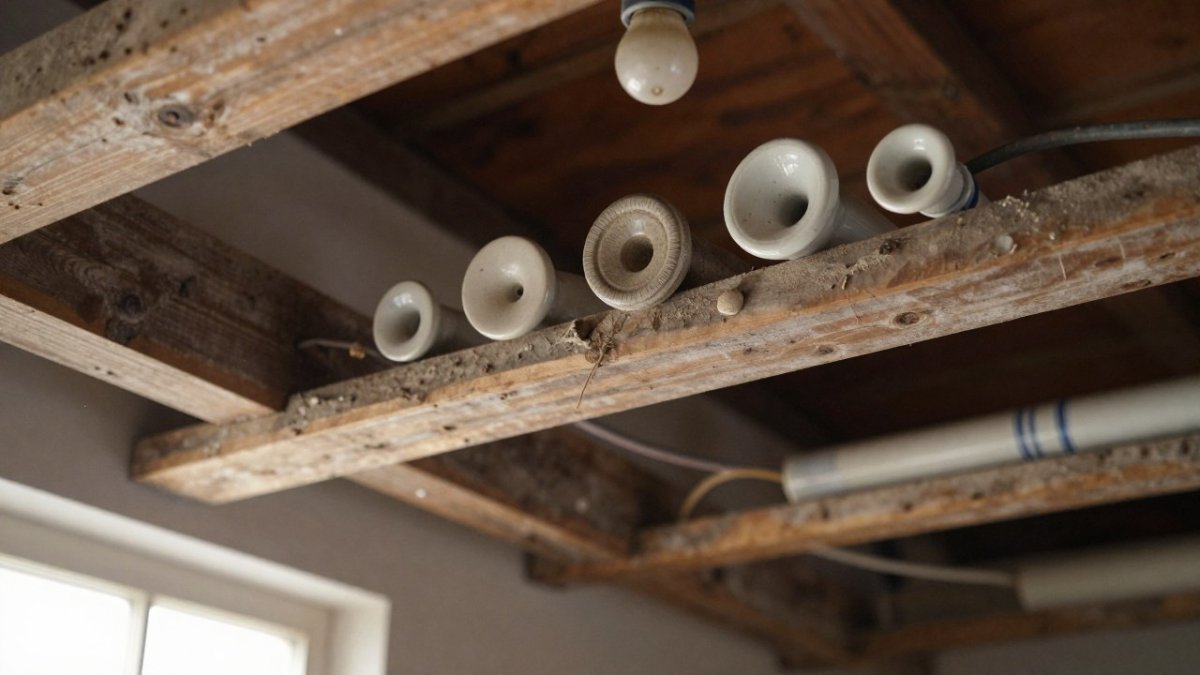
Ceramic Knobs and Porcelain Tubes as Visual Indicators
Two parts give knob and tube wiring away. Ceramic knobs are small round insulators nailed to joists. Porcelain tubes line the holes where wires pass through wood.
The wire itself is often black or white cloth-covered, sometimes brittle. If you see knobs and tubes together, you have found K&T wiring. What you have not found is proof that it is live.
How to Distinguish Knob and Tube Wiring from Newer Wiring
Telling knob and tube wiring apart from modern wiring comes down to four visible differences.
| Feature | Knob and Tube Wiring | Newer Wiring |
|---|---|---|
| Insulation | Cloth or rubber, often brittle | Plastic, color-coded |
| Conductors | Single wires, spaced apart | Bundled in one cable |
| Mounting | Ceramic knobs and tubes | Staples and cable clamps |
| Ground wire | None | Bare copper ground present |
Other clues help too. A two-prong outlet or a two-button light switch points to an old system. A baseboard outlet with no ground slot does the same. Newer cable sheathing is a strong sign the circuit was updated.
How to Test Knob and Tube Wiring with a Multimeter
Testing knob and tube wiring with a multimeter can confirm whether a circuit is live, but only if you work safely and understand what the reading actually proves. A voltage tester or multimeter reads voltage between a conductor and a known ground. Never touch bare wire with your hands, and never test a conductor whose insulation is cracked, brittle, or missing.
Before any testing, separate the two questions. Visual inspection tells you what wiring exists. Electrical testing tells you whether it is energized. Most practitioners find that the second question is the one homeowners get wrong, because a single zero reading at one device does not mean the whole run is dead.
Step-by-Step Verification Process
- Turn off the breaker that controls the circuit.
- Label the breaker so nobody flips it back on.
- Set the multimeter to AC voltage.
- Touch one probe to the black conductor and one to a metal box or ground.
- Read the display. Any voltage means the circuit is still energized.
- Test the white conductor the same way.
- If both read zero, the circuit is likely dead at that point.
Stop if you see damaged insulation or smell burning. Call an electrician.
Watch out: a zero reading at one outlet does not prove the whole circuit is dead. Knob and tube runs branch through wall cavities and attics, and a shared neutral or a hidden splice can keep part of the run energized from another breaker. A non-contact tester can also read false positives and false negatives near bundled conductors, so it should never be the only check.
How Electricians Confirm a Circuit Is De-Energized
Electricians confirm a circuit is dead with more than one check. They test at the panel, at the fixture, and at the last device on the run. They also trace the circuit to make sure a hidden splice or shared neutral is not feeding it from another breaker. This circuit tracing step is where most DIY checks fail.
Qualified professionals generally trace the circuit back to the panel, verify the breaker that controls it, and test at multiple points along the run rather than at a single device.
If you are not comfortable working inside a box or panel, stop at the visual stage. Contacting a live conductor you believed was off carries serious risk.
How to Tell if Knob and Tube Wiring Is Active Without a Tester
You can tell if knob and tube wiring is active without a tester only in a limited way. Visual clues raise suspicion; they cannot prove a wire is dead. A visual inspection shows what wiring exists, not whether it carries current. Treat every conductor you cannot trace as live until a qualified person proves otherwise.
Why Visual Inspection Alone Cannot Confirm Whether Wiring Is Live
Old wiring can look abandoned and still be energized. A circuit may feed one outlet through a path you cannot see. According to inspection guidance on identifying knob and tube wiring, homeowners should ask whether the wiring is active and which parts of the home it serves. A licensed electrician should test the circuits directly to determine whether they are active, as noted in energy center guidance on knob and tube wiring.
Visual inspection is still useful. It tells you where the system runs, which rooms it serves, and whether it has been modified. What it cannot tell you is whether a given conductor is connected at the panel, whether a splice behind plaster is feeding it, or whether a later remodel tied it into a newer circuit.
Why Apparently Abandoned Wiring May Still Be Energized
Abandoned wiring often stays connected at the panel. Someone removes a fixture and leaves the wire live in the ceiling. A breaker label may be wrong or missing. That is why an energized circuit can sit quietly for years behind plaster. Never assume old means off.
A few patterns explain most of these cases:
- Disconnected-looking ends. A wire that ends in a box with no fixture may still be connected at the panel and waiting for someone to touch it.
- Hidden splices. Old knob and tube runs were often extended with later wire, and the splice may sit in a wall cavity or attic where no one sees it.
- Shared circuits. One breaker can feed outlets in several rooms, so turning off the breaker for the room you are working in may not de-energize the run you are looking at.
- Later alterations. A remodel may have tied old conductors into a new circuit, or left old conductors in place while adding new ones beside them.
Watch out: a wire that looks cut, capped, or taped off is not proof it is dead. The only reliable answer comes from tracing the circuit and testing it at multiple points with appropriate equipment.
What to Do Instead of Guessing
If you want to know whether knob and tube wiring is active without testing it yourself, document what you see and hand that information to a licensed electrician. Note the rooms, the locations of knobs and tubes, any two-prong outlets or two-button switches, and any spots where the wiring looks modified. Photographs help. The electrician can then trace the circuits and test them directly, which is the only way to confirm whether the wiring is live.
Why Is Knob and Tube Wiring Dangerous?
Knob and tube wiring is dangerous because it was built without a ground and its insulation breaks down with age. That creates a real shock hazard and a fire risk. Exposed wiring in attics can be covered by insulation, which traps heat. Loose or spliced conductors add more risk. Insurance carriers often ask about old wiring for this reason. If breakers trip often on these circuits, our guide on why circuit breakers trip explains the common causes.
What to Do After Finding Active Knob and Tube Wiring
Finding active knob and tube wiring means one thing: plan to replace it. Do not remove wiring yourself. First, keep heavy loads off those circuits. Second, get a written inspection. Third, budget for rewiring the affected areas.
Our guide on how to replace knob and tube wiring walks through the full process. If inspection turns up damage, you may also need electrical repair before replacement begins.
Knob and Tube Wiring Replacement Cost: What to Expect
Knob and tube wiring replacement cost depends on how much of the home is affected. Factors include:
- Square footage and number of circuits
- Whether walls are open during a remodel
- Attic and basement access
- Panel condition and age
Pricing depends on the scope of work. You can check current pricing on our website or request a free estimate.
Schedule a Professional Knob and Tube Inspection
A visual check tells you what wiring is there. Only electrical testing tells you if it is live. That gap is where old wiring becomes a real safety issue.
Fox Electric Technologies provides certified electricians for professional electrical work. We deliver safe, code-compliant work with transparent pricing, and we handle both residential and commercial projects. If you need a rewire, we can schedule a rewire service or you can contact our team to book an inspection.
Get started with Fox Electric Technologies and know for certain what is running behind your walls.
Old wiring does not fix itself, and guessing is not a safety plan. If you have found knobs, tubes, or cloth-covered wire in your home, get it tested before you touch anything. Fox Electric Technologies offers certified electricians, code-compliant work, and clear pricing on panel upgrades and rewiring. Get started with Fox Electric Technologies and schedule your inspection with a free estimate.
Frequently Asked Questions
Can you test knob and tube wiring with a multimeter?
A multimeter can check voltage at an outlet or switch, but it cannot confirm whether hidden knob and tube wiring is active. The meter only reads what is exposed and connected. To verify a circuit safely, a licensed electrician uses a voltage tester and may trace the circuit at the panel. Never touch bare conductors with a multimeter; the shock hazard is real.
How can you tell if knob and tube wiring is active without touching it?
You cannot confirm active knob and tube wiring without testing. Visual clues like ceramic knobs, porcelain tubes, and cloth-insulated wires only show that old wiring exists. The circuit may be abandoned or still energized. The only safe way to know is to have a licensed electrician test the circuit and check the breaker panel. Do not rely on appearance.
What should you do if you find active knob and tube wiring?
If an electrician confirms active knob and tube wiring, treat it as a safety concern. Do not touch or remove it yourself. Ask the electrician to assess the circuit and recommend next steps, which may include replacement or isolation. For a free estimate on inspection or rewiring, contact Fox Electric Technologies. Do not attempt repairs on your own.
How much does it cost to replace knob and tube wiring?
Replacement cost depends on the size of the home, the number of circuits, and how accessible the wiring is. Pricing depends on the scope of work. Check current pricing on the Fox Electric Technologies website, or request a free estimate for an accurate quote. A thorough inspection first is essential to determine the scope of work before any replacement price can be given.

