
Table of Contents
- What Knob and Tube Wiring Is and How to Identify It
- Step 1: Assess Your Home’s Wiring and Plan the Replacement
- Step 2: Pull the Electrical Permit and Schedule Inspections
- Step 3: Run New Romex Wiring and Ground Every Circuit
- Step 4: Upgrade Your Electrical Panel and Service
- Step 5: Repair Drywall and Restore Your Home
- Knob and Tube Wiring Replacement Cost: What to Budget
- Knob and Tube Wiring Insurance Issues: What Homeowners Need to Know
- Why Hire a Licensed Electrician for Rewiring
- Frequently Asked Questions
Last Updated: September 23, 2026
What Knob and Tube Wiring Is and How to Identify It
Knob and tube wiring is an early electrical system that uses porcelain knobs and tube insulators to hold cloth-covered wires in place, and it has no ground wire. This guide walks through how to replace knob and tube wiring step by step, from the first inspection to the final drywall patch.
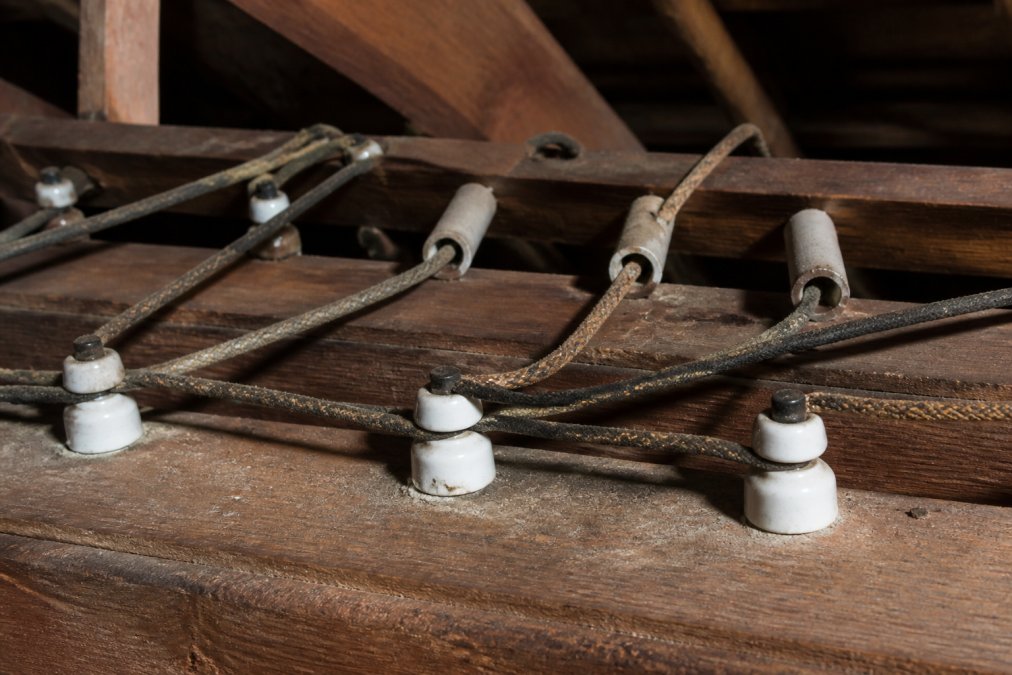
You can spot it in attics, basements, and crawlspaces. Look for white ceramic knobs nailed to joists, wires threaded through tubes, and cloth insulation that cracks when you touch it.
- Porcelain knobs: hold wires along framing
- Tube insulators: protect wires passing through wood
- Cloth-covered wire: insulation that turns brittle with age
- No ground wire: no path for stray current
Step 1: Assess Your Home’s Wiring and Plan the Replacement
Start by mapping every circuit in the house. A licensed electrician traces each branch circuit to its breaker, notes the amperage, and checks the electrical load on each one.
- Check the electrical panel for spare capacity
- Test outlets for grounding
- Note any overheating or scorch marks
- Count the circuits feeding kitchens and baths
Never bury old knob and tube wiring inside wall insulation. The cloth covering depends on open air to stay cool, and insulation contact can cause overheating. Leave it exposed until it’s removed or abandoned properly.
Step 2: Pull the Electrical Permit and Schedule Inspections
You need an electrical permit before any rewiring starts. This is not optional, and skipping it can void your insurance and stall a future home sale.
The permit process usually works like this:
- Apply with your local building department
- Submit a wiring plan showing new branch circuits
- Pay the permit fee
- Schedule a rough-in inspection before drywall goes up
- Schedule a final inspection after everything is connected
Step 3: Run New Romex Wiring and Ground Every Circuit
Romex is the standard modern cable, and every circuit it feeds must be grounded. The electrician pulls new cable through the walls, drills through studs, and connects each run to a grounded junction box.
- Dedicated circuit for the kitchen
- Separate line for laundry and bath
- Grounded outlets in every room
- Room for a future EV charger
Photograph every wall before the drywall goes back up. A clear photo of where each cable runs saves hours of guessing the next time you hang a shelf or add an outlet.
Step 4: Upgrade Your Electrical Panel and Service
Most homes with knob and tube also have a 60-amp fuse box or an early 100-amp panel. Neither was sized for the load a modern home puts on it, and neither was designed to accept the two-pole breakers that heat pumps, EV chargers, and induction ranges require.
- Load calculation. The electrician runs a load calculation per the National Electrical Code (Article 220) to determine the minimum service size. A typical 2,000-square-foot home with electric cooking, electric water heating, and a future EV charger lands at 200 amps. Homes with gas appliances and no EV plans sometimes qualify for 150 amps.
- Utility coordination. The utility must disconnect power at the meter before the service entrance cable, meter base, and panel can be replaced. This is scheduled separately and can add days to the timeline.
- Meter base and service entrance. If the existing meter base is rated for 60 or 100 amps, it is replaced. The service entrance conductors are upsized to match the new panel.
- Grounding electrode system. A new panel requires a grounding electrode conductor bonded to a ground rod (or rods), the water line if metallic, and any structural steel. Older homes often have no grounding electrode at all, so this is added from scratch.
- AFCI and GFCI breakers. Current code requires arc-fault circuit interrupter protection on most 120-volt branch circuits in dwelling units, and ground-fault circuit interrupter protection in kitchens, baths, garages, basements, and outdoors. A new panel is the point where these get installed.
- Inspection. The panel replacement is inspected separately from the branch-circuit rough-in. Expect the inspector to verify breaker sizing, conductor ampacity, grounding, and labeling.
| Old Setup | Modern Upgrade | Why It Matters |
|---|---|---|
| 60-amp service | 200-amp service | Runs modern appliances safely |
| Fuse box | Circuit breaker panel | Trips instead of overheating |
| No grounding electrode | Ground rod plus bonding | Safer fault path |
| Few circuits | Dedicated branch circuits | Less electrical load per line |
| No AFCI/GFCI | AFCI and GFCI breakers | Meets current code |
A panel swap is not a DIY job in any jurisdiction that adopts the National Electrical Code. The utility disconnect, the load calculation, and the grounding electrode system all require a licensed electrician and a permit. Attempting it yourself can void your insurance and will fail inspection.
Ask the electrician to leave two spare breaker spaces in the new panel. The incremental cost is minimal, and it avoids a second panel replacement when you add a heat pump, a hot tub, or a Level 2 EV charger later.
Step 5: Repair Drywall and Restore Your Home
Rewiring leaves holes, and drywall repair is the part most guides skip. Electricians cut access holes to fish cable through walls, then a drywall crew patches and paints.
- Patch all access holes
- Match the existing texture
- Prime and paint
- Reinstall outlets and covers
The electrical work is only half the job. Drywall repair and painting are what make the finished home look untouched, so factor both into your timeline and budget.
Knob and Tube Wiring Replacement Cost: What to Budget
Knob and tube wiring replacement cost depends on the size of your home, how much wiring needs replacing, and whether the panel needs an upgrade. There is no single number, and pricing depends on the scope of work, materials, and specific project requirements. For current pricing, please refer to Fox Electric Technologies’s website or request a free estimate.
What drives the cost up:
- Plaster and lath walls. Plaster is harder to cut cleanly and harder to patch than drywall. Expect a 15 to 30 percent premium on labor in a plaster home.
- Finished ceilings and floors. Cable has to travel somewhere. Finished spaces mean more access holes and more restoration.
- Number of circuits. A kitchen alone may need six to eight dedicated circuits under current code. Each one is a separate run.
- Panel and service upgrade. If the existing service is 60 amps, the upgrade is not optional.
- Hard-to-reach runs. Second-floor bedrooms over a finished first floor, or any run through a flat roof section, adds labor.
- Asbestos or vermiculite insulation. If the attic insulation contains asbestos, abatement must happen before the electrician can work. This is a separate licensed trade and a separate line item.
What drives the cost down:
- Open attic or unfinished basement. Cable can be run through accessible framing instead of fished through finished walls.
- Partial rewire. If only the kitchen and bath have active knob and tube, you may not need a whole-house rewire.
- Doing the drywall repair yourself. Many homeowners patch and paint after the electrician leaves. This is the single largest line item you can remove from the bid.
Homeowners who want a realistic budget before requesting bids. Understanding the factors that influence cost helps in evaluating project proposals.
Knob and Tube Wiring Insurance Issues: What Homeowners Need to Know
Knob and tube wiring insurance issues are one of the biggest reasons homeowners finally replace it. Many insurers refuse to cover a home with active knob and tube, or they charge a higher insurance premium.
- Insurers may deny new policies
- Existing policies may charge more
- A home inspection can stall a sale
- Documented replacement can lower your premium
Homeowners planning to sell, refinance, or add coverage. Replacing knob and tube before the inspection prevents last-minute problems.
Why Hire a Licensed Electrician for Rewiring
Hiring a licensed electrician for rewiring is the safest path, and in most places it’s required by code. A certified electrician pulls the permit, follows the National Electrical Code, and guarantees the work passes inspection.
Frequently Asked Questions
How difficult is it to replace knob and tube wiring?
Replacing knob and tube wiring is a major project that requires opening walls and ceilings to access old wires, running new Romex cable, and upgrading the electrical panel. Most homeowners hire a licensed electrician for rewiring because the work involves permits, inspections, and code compliance. A full replacement in a typical home takes several days to a few weeks depending on size and accessibility.
Can you partially replace knob and tube wiring?
Partial replacement is possible when only certain branch circuits are accessible or when you’re renovating one area at a time. However, insurance companies and home inspectors often flag any remaining knob and tube, and mixing old ungrounded wiring with new grounded circuits can create confusion at the panel. Many electricians recommend a full replacement to eliminate the fire hazard entirely.
Is it illegal to sell a house with knob and tube wiring?
No federal law bans selling a home with knob and tube wiring, but insurance companies may refuse to cover it or charge higher premiums. Some states and lenders require disclosure or repairs before closing. A home inspection will typically flag knob and tube as a fire hazard, which can stall a sale or reduce the asking price until the wiring is replaced.
Why is knob and tube wiring considered a fire hazard?
Knob and tube wiring lacks a ground wire, uses cloth-insulated conductors that become brittle with age, and relies on open air to dissipate heat. When thermal insulation is blown over it, heat builds up and can ignite nearby wood. Overloading old circuits with modern appliances also causes overheating. These factors make it a fire hazard that fails current NEC safety standards.
Replacing knob and tube wiring is a big job, but it protects your home, your family, and your insurance coverage. Fox Electric Technologies delivers safe, code-compliant rewiring and panel upgrades with certified electricians and honest pricing. Get started with Fox Electric Technologies and a free estimate, and make your electrical system reliable for years to come.
