
Table of Contents
- What Constitutes an Emergency Electrical Situation
- 24/7 Emergency Electrical Services: Availability and Response Times
- Common Emergency Repairs: Circuit Breaker Issues and Wiring Failures
- Emergency Electrical Panel Repair Cost and Budget Planning
- How to Pass Electrical Inspection First Time After Emergency Repairs
- Safety Steps While Waiting for Emergency Electrical Service
- Choosing a Licensed and Bonded Emergency Electrician
- Preventative Maintenance to Avoid Future Electrical Emergencies
- Frequently Asked Questions
Last Updated: September 21, 2026
What Constitutes an Emergency Electrical Situation
An emergency electrical repair is any electrical issue that poses an immediate safety risk or disrupts essential power to your home or business. These situations demand urgent attention from a licensed electrician to prevent fire, electrocution, or property damage.
Common scenarios include complete power loss, burning smells, sparking circuits, exposed wiring, frequent breaker trips, or flickering lights. Electrical fires can start within walls without warning, making rapid diagnosis critical.
The difference between a routine repair and an emergency comes down to safety risk. If someone could be injured or a fire could start, treat it as an emergency. According to the National Fire Protection Association’s electrical safety guidelines, faulty electrical systems cause thousands of residential fires annually. Fox Electric Technologies emphasizes that waiting for a standard appointment when you suspect an electrical emergency can turn a fixable problem into a catastrophic one.
Do not ignore warning signs like burning smells, sparking outlets, or constant breaker trips. These indicate immediate electrical hazards. Turn off power to the affected area and call for emergency service right away.
24/7 Emergency Electrical Services: Availability and Response Times
Most electrical emergencies happen outside normal business hours. That’s why 24/7 emergency electrical services exist to respond when standard electricians are unavailable.
True 24/7 providers maintain on-call teams ready to dispatch within 30-60 minutes of your call. Response time depends on location, workload, and technician availability.
When you call, describe the specific problem: complete outage, burning smell, sparking, or panel issues. This helps dispatchers prioritize your call and send the right specialist.
When calling for emergency electrical service, have your address ready and describe exactly what’s happening. Avoid turning power back on or attempting repairs yourself. This information helps the electrician arrive prepared.
Common Emergency Repairs: Circuit Breaker Issues and Wiring Failures
Circuit Breaker and Electrical Panel Emergencies
When the main breaker fails or the panel malfunctions, you lose power to everything. A tripped breaker that won’t reset, a burning smell from the panel, or visible damage demand immediate professional attention.
If a breaker trips repeatedly, it signals an overload or short circuit. Resetting it temporarily restores power but leaves the underlying problem active. Continuing to reset a failing breaker increases fire risk.
Panel upgrades become necessary when an older system can’t handle modern electrical demands. Homes built decades ago often have 60 or 100-amp panels designed for far fewer devices. Adding a new air conditioner, EV charger, or heat pump can overload an undersized panel. When a panel fails unexpectedly, emergency replacement restores safety and function.
Faulty Wiring and Short Circuits
Damaged, outdated, or improperly installed wiring creates fire hazards. A short circuit occurs when hot and neutral wires touch, generating extreme heat that can ignite surrounding insulation or framing.
Signs include frequent breaker trips, non-working outlets, flickering lights, burning smells, or scorch marks. Older homes with cloth-insulated or aluminum wiring face higher failure rates. Rodent damage, water exposure, or renovation damage can compromise wire integrity instantly.
When wiring fails, a licensed electrician must locate and replace the damaged section. This often requires opening walls or accessing crawl spaces. Emergency repairs prioritize safety and code compliance.
GFCI and AFCI Outlet Failures
GFCI (Ground Fault Circuit Interrupter) outlets protect against electrocution in wet areas. AFCI (Arc Fault Circuit Interrupter) outlets detect dangerous arcs that cause fires. When they fail to trip or trip constantly, they lose their protective function.
A GFCI or AFCI that won’t hold a test or trips constantly needs replacement. Code requires GFCI protection in bathrooms, kitchens, garages, and outdoor outlets; AFCI protection in bedrooms and living areas.
Emergency Electrical Panel Repair Cost and Budget Planning
Electrical emergencies create urgency and fear of overcharging. This section breaks down cost structures so you understand what you’ll pay and why.
Understanding Emergency Service Pricing Structure
Emergency service has two components: the service call fee and the repair cost.
Service Call Fee (Diagnostic Visit)
Service call fees typically range from $75 to $150 for standard business-hours calls. After-hours emergency calls carry a premium of $150 to $300, reflecting 24/7 availability costs.
The service call fee is usually credited toward the repair cost. Ask the dispatcher to confirm this when you call.
Repair Cost (Labor + Materials)
Repair costs depend entirely on what’s wrong. A simple breaker replacement costs far less than a full panel upgrade or emergency rewiring.
Common Emergency Repairs: Typical Cost Ranges
Always get a written estimate before work begins.
Single Circuit Breaker Replacement: $150-$300
A breaker that won’t reset or is visibly damaged can usually be replaced without replacing the entire panel. Material cost is $20-$50; labor is $100-$250.
GFCI or AFCI Outlet Replacement: $100-$200
Material cost is $15-$40; labor is $75-$150. If multiple outlets need replacement, the cost per outlet drops slightly.
Electrical Panel Inspection and Testing: $200-$400
An electrician can inspect the panel, test breakers, check connections, and assess overload.
Why Emergency Service Costs More
Emergency service costs more because of 24/7 staffing, response time guarantees, overtime pay, specialized equipment, and unpredictable scope. You’re paying for immediate availability and expertise when you need it most.
How to Get Accurate Estimates and Avoid Surprise Charges
Get a written estimate that includes the service call fee, repair cost, and what’s included (parts, labor, permits, inspection). If additional problems are discovered, the electrician should notify you and provide an updated estimate before proceeding.
Financing and Payment Options
Many emergency service providers offer various payment options. Confirm payment methods before the electrician arrives so there are no surprises.
The Cost of Delaying Emergency Repair
Delaying an emergency repair to save money often costs more. A failing breaker might cause an electrical fire resulting in tens of thousands in property damage. Emergency service is expensive because the alternative, property loss, injury, or death, is far more expensive.
Get a written estimate before work begins. Transparent pricing lets you understand what you’re paying for and protects you from surprise charges. Reputable emergency providers credit the service call fee toward the repair cost, so you’re not paying twice.
How to Pass Electrical Inspection First Time After Emergency Repairs
After emergency repairs, your system must pass electrical inspection to ensure it meets current code. Inspectors verify that breakers are properly sized, outlets are grounded, wiring is protected, and panels are labeled. The key to passing inspection is hiring a licensed electrician who knows current code requirements.
Safety Steps While Waiting for Emergency Electrical Service
Electrical emergencies create panic and dangerous decisions. Use this framework to assess what you’re facing and what actions are safe.
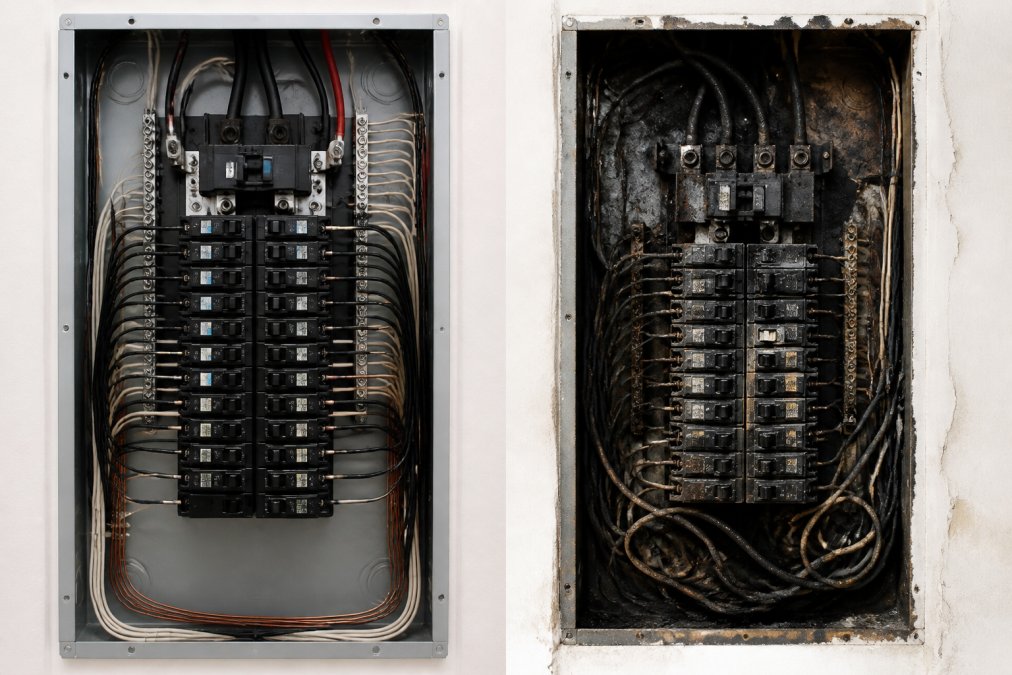
Immediate Hazard Assessment: Is This Life-Threatening Right Now?
Start here. Ask yourself these three questions in order:
1. Is there fire, smoke, or sparks visible?
If yes: Evacuate immediately. Call 911 first. Do not attempt to extinguish an electrical fire with water. Leave the building and let emergency responders handle it.
Safe Actions to Take While Waiting
Step 1: Isolate the problem
Turn off the breaker that controls the affected circuit. If you don’t know which breaker, turn off the main breaker. This removes power from the problem area.
What NOT to Do (Critical)
Do not attempt to repair it yourself. A single mistake causes instant electrocution. This is not a DIY situation.
When to Call 911 Versus the Electrician
Call 911 if:
- There is active fire or smoke
- Someone is being electrocuted or unconscious
- There is a downed power line on your property
- You smell gas in addition to burning electrical smells (gas + electrical fire is extremely dangerous)
- You are unsure whether the situation is life-threatening
Call the electrician if:
- Power is out but there’s no fire or immediate hazard
- An outlet or switch is sparking but contained
- A breaker keeps tripping
- You smell burning but can’t locate the source and there’s no visible fire
- Lights are flickering or dimming abnormally
- You’ve turned off power and the hazard has stopped, but you need diagnosis and repair
You can call both simultaneously. Emergency responders will secure the scene; the electrician will repair it.
Choosing a Licensed and Bonded Emergency Electrician
Licensing, bonding, and insurance are non-negotiable. When you call for emergency service, verify credentials immediately. Taking 60 seconds to verify credentials protects you.
Ask the electrician to explain the problem and the solution in plain language. You should understand what went wrong and why the repair is necessary. If the explanation doesn’t make sense, ask for clarification or get a second opinion.
Preventative Maintenance to Avoid Future Electrical Emergencies
Most electrical emergencies are preventable. Regular maintenance catches problems before they become dangerous.
Common preventative actions include:
- Having an electrician inspect your panel and wiring if your home is over 20 years old
- Testing GFCI and AFCI outlets monthly to ensure they’re functioning
- Avoiding overloaded outlets and power strips
- Having any burning smells, sparking, or unusual sounds investigated immediately
- Upgrading your panel if you’re adding major appliances or an EV charger
- Replacing outdated wiring in older homes before it fails
Frequently Asked Questions
How do I identify a genuine emergency electrical situation that requires immediate service?
True electrical emergencies include sparking outlets, burning smells from walls or panels, frequent circuit breaker trips, exposed wiring, water damage near electrical systems, and complete power loss in your home. Flickering lights or a single non-working outlet are typically not emergencies. If you smell burning or see sparks, turn off power at the breaker and call a licensed electrician immediately. Do not attempt repairs yourself when safety is at risk.
What should I expect to pay for an emergency electrical repair service call?
Emergency electrical panel repair costs depend on the nature and severity of the problem, your location, and the electrician’s experience. Service calls, diagnostics, and labor rates vary significantly. Rather than guessing at a price range, contact a licensed electrician for an honest assessment and transparent estimate.
How do I ensure my electrical repairs pass inspection on the first attempt?
Work only with licensed electricians who understand local electrical codes and National Electrical Code (NEC) standards. Verify that all work uses approved materials and follows code compliance requirements. Request documentation of inspections and permits upon completion.
What are typical response times for emergency electrical services?
Response times vary by provider and demand, but many 24/7 emergency electrical services aim to arrive within 30 minutes to 2 hours. Some offer same-day service for urgent issues. Always ask about response time guarantees when you call. Having a trusted, bonded and insured local electrician’s number saved means faster service when you need it most, especially during evenings, weekends, or holidays.
