
Last Updated: November 1, 2026
Quick Summary
EV charger installation requires matching the charger’s output to a correctly sized circuit, so a 48-amp charger needs a 60-amp circuit and a 40-amp charger needs a 50-amp circuit. Before committing, have an electrician assess whether your electrical panel has enough capacity, since a 100-amp service is a common limit. Most jurisdictions also require a local permit.
- A 48-amp charger requires a 60-amp circuit; a 40-amp charger requires a 50-amp circuit.
- A 100-amp service is the most common panel limit homeowners run into.
- Have a professional electrical assessment done before installation to verify panel capacity.
- Permit requirements are set locally, so your city or county decides what gets inspected.
- Colorado devices installed after July 1, 2026 must submit a Placed in Service Form within 90 days.
Table of Contents
- What Changed for EV Charger Installation in 2026
- Home EV Charger Electrical Requirements
- EV Charger Installation Permit Requirements
- Level 2 EV Charger Installation Cost Factors
- How Long EV Charger Installation Takes
- Installation Checklist: Components You Need
- Booking Your Home Charger Assessment with Fox Electric
- Frequently Asked Questions
What Changed for EV Charger Installation in 2026
If you are planning an EV charger installation project under the requirements in 2026, the rules that matter most are not new rules so much as tighter expectations around capacity, paperwork and equipment. Charger installation sits at the point where electrical code, utility limits and incentive programs meet, and the details shift from state to state.
Several changes are worth tracking. California’s EV charger inventory reporting standards take effect in April 2026, but they apply to entities operating chargers and exclude chargers at single-family and multifamily homes, so a typical home installation falls outside them California Energy Commission EV charger data and reliability standards. Colorado is tightening its own process: devices installed after July 1, 2026 must submit a Placed in Service Form within 90 calendar days after their first day in service Colorado Department of Labor and Employment retail EV charging regulations.
Federal incentives can carry deadlines, so homeowners planning a project should confirm current eligibility and deadlines with their tax adviser before scheduling work.
Home EV Charger Electrical Requirements
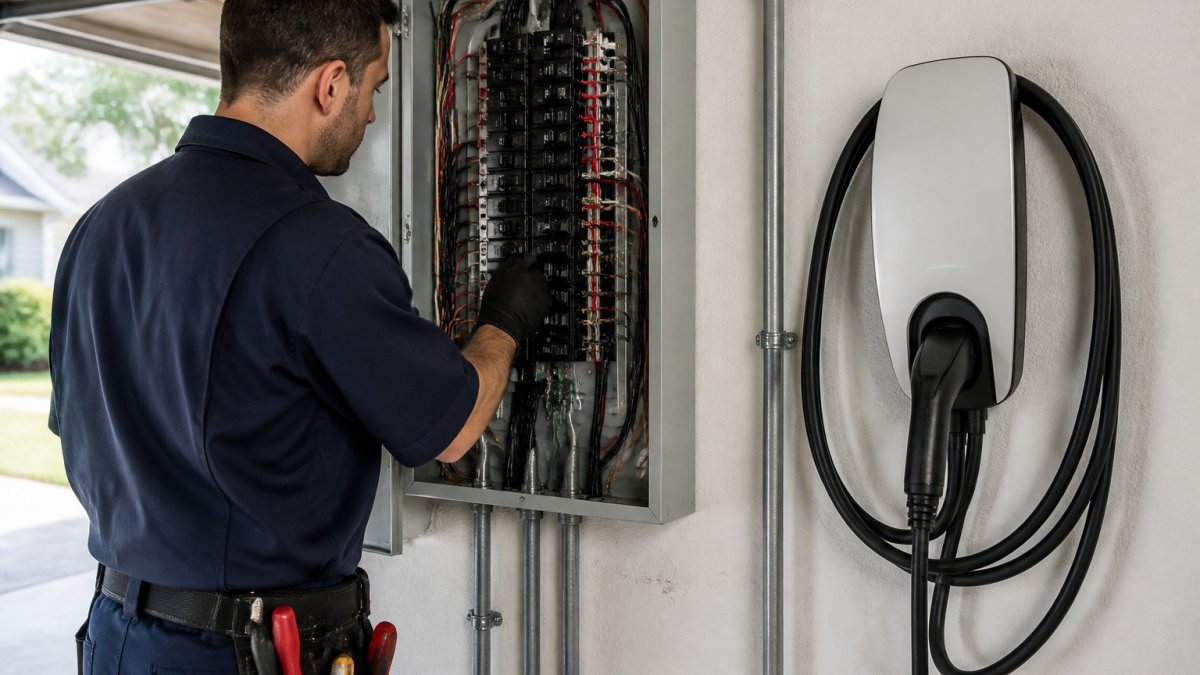
Most home installs come down to three questions: how much current the charger draws, what size breaker protects the circuit, and whether the service panel has room for both. Get these wrong and you either trip breakers constantly or create a fire risk on undersized wire.
Matching Charger Output to Circuit Size
Charger output, breaker size and wire gauge have to be coordinated as one system. Installation guidance from Portlandia Electric Supply gives two examples: a 48-amp charger requires a 60-amp circuit, and a 40-amp charger requires a 50-amp circuit Portlandia Electric Supply EV charger circuit guidance. The breaker is sized above the charger’s continuous draw, which is why the number on the charger label is not the number you size the circuit to.
Watch out: setting the charger output higher to get faster charging on a circuit that was never sized for it will trip breakers or overheat conductors, so the output setting has to match what the circuit can actually carry.
Checking Your Panel Capacity
A 100-amp service is the most common limit homeowners run into. Before committing to a charger, have an electrician calculate the existing load. The U.S. Department of Energy’s multifamily charging guide recommends a professional electrical assessment before installation to verify whether a property has enough capacity for EV charging, and the same logic applies to single-family homes U.S. Department of Energy multifamily EV charging guide.
When the panel is undersized, a panel upgrade may be needed.
The table below pulls the key circuit and panel figures from this section so they are easy to scan.
| Item | Value | Note |
|---|---|---|
| 48-amp charger | 60-amp circuit | Breaker sized above continuous draw |
| 40-amp charger | 50-amp circuit | Breaker sized above continuous draw |
| Common panel limit | 100-amp service | Check load before committing to a charger |
| Panel assessment | Before installation | Verifies capacity for EV charging |
EV Charger Installation Permit Requirements
Most jurisdictions require a permit for a new 240-volt circuit, and the inspector will look for code-compliant wire sizing, breaker selection and grounding. Permit rules are set locally, so the requirements for your city or county, not a national template, decide what gets inspected.
Requirements also differ when federal incentives are involved. Under the federal Buy America waiver notice, the final waiver applies to EV chargers manufactured on or after July 1, 2024 whose final assembly occurs in the United States Federal Register Buy America waiver notice for EV chargers. That affects which equipment qualifies for certain programs, so check the product’s documentation before purchase.
Level 2 EV Charger Installation Cost Factors
Installed cost depends on the distance from the panel to the parking space, whether a panel upgrade is needed, the charger model and any trenching or wall work. Costs depend on those site conditions. Request a free estimate for pricing specific to your property.
How Long EV Charger Installation Takes
For a straightforward install where the panel has capacity and the charger sits close to it, the electrical work can be completed quickly. Scope grows with distance, wall type and any panel work, and the permit and inspection step adds time on either side.
Installation Checklist: Components You Need
Before the install day, confirm you have:
- A load calculation confirming the panel can support the charger
- Charger model with an output setting matched to the circuit
- A dedicated circuit with a correctly sized breaker
- Wire gauge rated for the breaker and the run length
- A local permit and scheduled inspection
- A GFCI or equivalent protection as required by your local code
- Documentation for any incentive or tax credit you plan to claim
Best for: homeowners with a clear charging need and a panel that has room. Skip if: you are still deciding whether to buy an EV and have no charging location planned.
Booking Your Home Charger Assessment with Fox Electric
If you want a clear answer on your panel capacity and the scope of work, book a home charger assessment with Fox Electric Technologies. If your panel needs more capacity, our electrical panel upgrade service in Los Angeles covers the work, and our EV charger installation service handles the charger itself.
Frequently Asked Questions
What electrical requirements are needed to install a home EV charger?
A home Level 2 charger generally needs a dedicated branch circuit sized to the charger’s output. A 48-amp charger requires a 60-amp circuit, and a 40-amp charger requires a 50-amp circuit, . The breaker, wire gauge and charger output setting must be coordinated. Your panel must also have enough spare capacity, which a licensed electrician can confirm with a load calculation before work begins.
Do I need a permit to install an EV charger?
In most US jurisdictions, adding a new EV charger circuit requires an electrical permit and a follow-up inspection by the local building department. Permit rules vary by city and county, so confirm requirements with your local authority before work starts. A licensed contractor can often pull the permit and schedule the inspection.
Will I need to upgrade my electrical panel for an EV charger?
Not always. Many homes with a 100-amp or 200-amp service can add a Level 2 charger if the existing load calculation leaves enough capacity. A professional electrical assessment before installation can verify available capacity, especially in older homes. If the panel is near its limit, a load management device or a panel upgrade may be the practical route.
How long does EV charger installation take?
A straightforward residential Level 2 installation, where the panel has capacity and the charger sits near it, can be completed quickly. Projects that need a new circuit run over a longer distance, a panel upgrade, or trenching may take several days. Inspection scheduling can add time, so the total calendar duration depends on permit timing as well as physical work. Ask your installer for a timeline covering both.

