
Last Updated: November 22, 2026
Quick Summary
You can often add more circuits to an old panel, but only after confirming the panel has physical room for another breaker and the service has the electrical capacity to carry the extra load. A full panel is not automatically a dead end, and a panel with empty slots is not automatically safe to expand.
- A full breaker box describes space, not capacity, so a full panel can still have capacity to spare.
- Tandem breakers fit two circuits in one slot but only work in manufacturer-approved positions listed on the panel label.
- Never install a tandem breaker in an unapproved slot, because a loose connection creates a real fire risk.
- A subpanel is the standard solution when the main panel has no room but the service still has capacity.
- A load calculation compares household loads against service capacity to decide whether a circuit can be added.
Table of Contents
- Can You Add More Circuits to an Old Panel? The Short Answer
- How to Tell If Your Breaker Box Is Full
- Tandem Breakers: A Space-Saving Option With Limits
- How to Add a Subpanel to a Full Breaker Box
- Load Calculation in Practical Terms
- Adding Circuits vs. Upgrading the Panel: Side-by-Side
- Cost to Add a Circuit to a Panel
- Get a Free Estimate Before You Commit
- Frequently Asked Questions
Can You Add More Circuits to an Old Panel? The Short Answer
Yes, you can often add more circuits to an old panel, but only after confirming two separate things: that the panel has physical room for another breaker, and that the service has the electrical capacity to carry the extra load. A full panel is not automatically a dead end, and a panel with empty slots is not automatically safe to expand. This guide walks through both checks, the workarounds that actually hold up, and the warning signs that mean you should stop and call a licensed electrician.
The most common mistake we see is treating “no empty slots” as the same problem as “no capacity left.” They are different problems with different fixes and very different price tags. One may be solvable with a tandem breaker in an approved position.
Below, we break down how to add more circuits to an old panel the right way, starting with the checks a qualified electrician runs before touching anything.
How to Tell If Your Breaker Box Is Full
A breaker box is full when every slot is occupied by a breaker, but “full” describes space, not capacity.
Open the panel door and look at the labeling inside. Manufacturers print a directory there listing which breaker positions accept which breaker types.
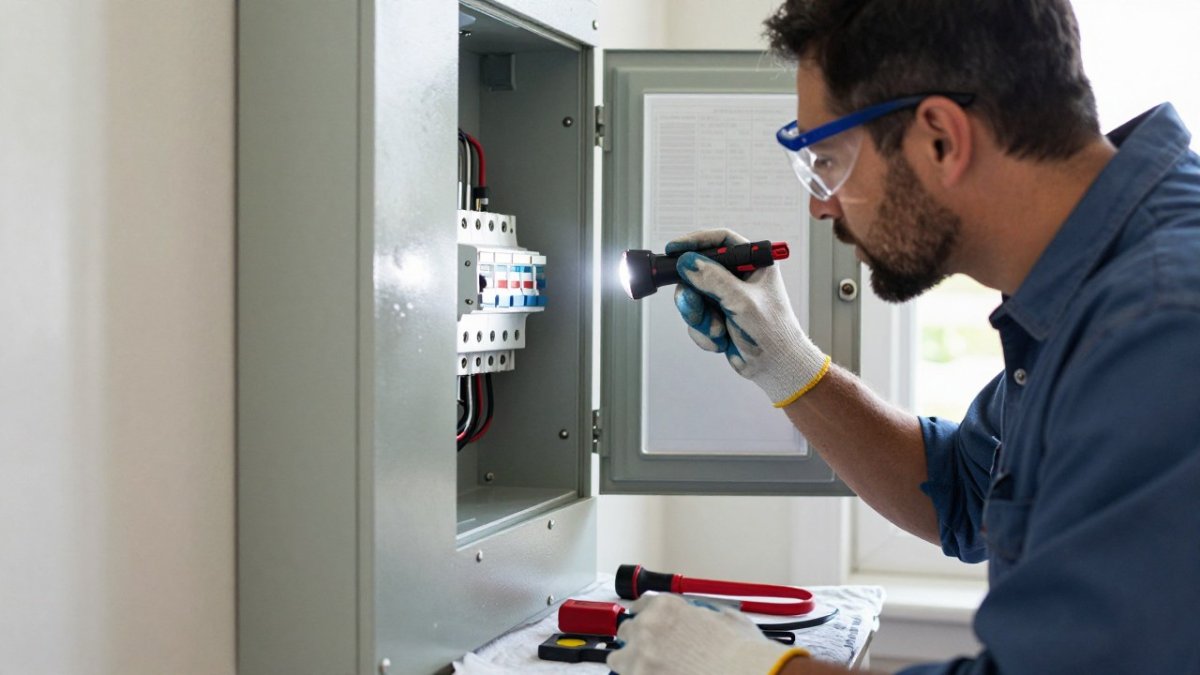
Physical Space vs. Electrical Capacity
Physical space is how many breaker positions remain open. Electrical capacity is how much total load the service can carry, measured in amps against the main breaker rating. Adding circuits consumes both.
A panel with open slots but a service already near its limit will trip the main breaker under load. That is a capacity problem, not a space problem, and no tandem breaker fixes it.
Warning Signs That Call for a Professional Right Away
Stop and call a licensed electrician if you notice any of the following:
- Scorching, discoloration, or a burning smell near the panel
- Breakers that trip repeatedly or feel hot to the touch
- Buzzing or crackling sounds from inside the panel
These are shock hazard and fire risk signals. Do not open the panel again until a qualified electrician has inspected it.
Tandem Breakers: A Space-Saving Option With Limits
Tandem breakers, also called twin breakers, fit two circuits into a single slot and are the cheapest way to free up breaker spaces. They are not universal. They only work in specific panel positions the manufacturer approves, and the approval is tied to the panel’s bus bar design, not to whether the breaker physically snaps in.
The critical rule: never install a tandem breaker in a slot the panel label does not list as approved for it. Manufacturers design bus bars to handle tandem breakers only in designated positions, usually the outer slots. Forcing one into an unapproved position creates a loose connection and a real fire risk.
How to Verify Panel Compatibility and Approved Breaker Positions
Verification takes four steps, and each one matters:
- Identify the panel model. Look for the manufacturer’s name and model number printed on the inside label, usually on the door or the dead front. Photograph the label before anything else, because it is the only authoritative source for what the panel accepts.
- Read the tandem-approved positions. The label often includes a diagram or a notation such as “CTL” (circuit total limit) that shows which slots accept tandem breakers and the maximum number of circuits the panel allows. Some labels list approved breaker types by catalog number.
- Match the tandem breaker to the panel’s brand and model. Approved breakers are panel-specific. A breaker from a different brand may fit mechanically but will not be listed for that panel, and an unlisted breaker voids the manufacturer’s listing and can fail an inspection.
- Check the total circuit count against the panel’s maximum. The label states the maximum number of circuits; a tandem breaker adds circuits, not slots, so the count can exceed the limit even when the physical space looks available.
Watch out: if the label is missing or unreadable, compatibility cannot be confirmed, and the safe answer is a subpanel or a panel upgrade rather than a guess.
Why Unapproved Tandem Positions Fail
The bus bar in a panel is a metal strip with stabs that connect to breaker clips. Tandem-approved positions have stabs designed to carry two breaker connections securely; unapproved positions do not. When a tandem breaker is forced into an unapproved slot, the second connection may not seat fully, which raises resistance at the contact point. Resistance under load produces heat, heat degrades the connection further, and the cycle can end in arcing or a fire inside the panel.
When a Tandem Breaker Is the Right Call
A tandem breaker makes sense when the panel has open, approved positions, the service has capacity to spare, and the new circuits are small, typically 15-amp or 20-amp general-purpose circuits rather than a 240-volt appliance run. It is a space fix, not a capacity fix. If the service is already near its limit, a tandem breaker adds load the service cannot carry, and the main breaker will trip under demand.
How to Add a Subpanel to a Full Breaker Box
Adding a subpanel to a full breaker box is the standard solution when the main panel has no room but the service still has capacity.
The work involves installing a feeder breaker in the main panel, running feeder conductors to the subpanel location, and bonding and grounding the subpanel correctly.
A garage panel is a common example: a subpanel there handles a workshop, an EV charger, or a detached structure without overloading the main panel.
Load Calculation in Practical Terms
A load calculation is the math that determines whether the existing service can carry the circuits you want to add.
In practical terms, think of it this way. A 100-amp service has a fixed ceiling. Add up the major loads, like an electric range, water heater, dryer, HVAC system, and any 240-volt circuit, then add the general lighting and receptacle load.
What the Calculation Actually Does
The calculation separates loads into two groups. The first is the general lighting and receptacle load, calculated from the square footage of the home at a set volt-ampere per square foot, plus small-appliance and laundry branch circuits. The second is the appliance and equipment load, taken from the nameplate ratings of the range, water heater, dryer, HVAC, and any other fixed equipment.
The result is compared against the service rating. If the calculated load plus the proposed new circuit stays below the service capacity with margin, the circuit can be added. If it does not, the options are a service upgrade or a load-management approach, not another breaker.
A Worked Example
Consider a home with a 100-amp service, a 1,500-square-foot floor area, an electric range, an electric water heater, a dryer, and a central air conditioner. The general lighting and receptacle load comes from the square footage plus the small-appliance and laundry circuits.
You do not need to run this math yourself, but you should understand why an electrician asks what appliances you have. It is the difference between a simple fix and a service upgrade.
What to Have Ready for the Electrician
To make the assessment fast and accurate, gather the nameplate ratings from the range, water heater, dryer, HVAC equipment, and any large motor loads, along with the square footage of the home and the main breaker rating. Photograph the panel label and the main breaker. With those in hand, an electrician can run the calculation and tell you whether the service has capacity for the circuit you want, whether a subpanel is the right intermediate step, or whether an upgrade is the only compliant path.
Adding Circuits vs. Upgrading the Panel: Side-by-Side
The right choice depends on whether you have a space problem, a capacity problem, or both. Here is how the two options compare.
| Factor | Add Circuits (Tandem or Subpanel) | Full Panel Upgrade |
|---|---|---|
| Best for | Open capacity, limited space | Overloaded service, outdated panel |
| Typical scope | New breaker, wiring, possible subpanel | New panel, service conductors, meter work |
| Disruption | Hours to one day | One to two days |
| Permits | Usually required | Required |
| Longevity | Extends existing panel | Resets the clock on the service |
| Future capacity | Limited by existing service | Sized for EV chargers and modern loads |
For a closer look at upgrade pricing, see our guide to the cost of upgrading a 100 amp electrical panel and the cost of a 200 amp panel upgrade. If you are weighing an upgrade over adding circuits, our electrical panel upgrade service covers what the work involves.
Pros of keeping the old panel: lower upfront cost, less disruption, and adequate performance when capacity is fine. Cons: limited future capacity, and an aging panel still ages. Pros of replacing the panel: modern capacity for EV chargers and added loads, fresh breakers, and a clean inspection record.
Cost to Add a Circuit to a Panel
The cost to add a circuit to a panel varies with the distance from the panel to the new outlet, the amperage, and whether the panel needs a subpanel or an upgrade.
For context on panel replacement pricing, Angi’s panel replacement cost data reports a range of $518 to $2,193, with total costs reaching up to $4,500 depending on amperage and panel type.
Pricing depends on the scope, the panel type, and the permit requirements. For current pricing or a quote, contact our team.
Get a Free Estimate Before You Commit
The safe path from “can you add more circuits to old panel” to a finished job runs through an inspection, a load check, and a written scope.
Review our panel installation and upgrade services, or contact our team to schedule an assessment and get a free estimate.
Adding circuits to an old panel is a decision with real safety stakes, and the wrong shortcut can cost far more than the right fix.
Frequently Asked Questions
Can I add a subpanel to a 200-amp panel?
Yes, a 200-amp main panel often has enough service capacity to feed a subpanel, but the answer depends on your existing load. An electrician performs a load calculation that totals your household loads, including any 240-volt appliances and an EV charger, then compares the result to the panel’s rating. If the numbers fit, a subpanel adds breaker spaces for new circuits without replacing the main panel. If the service is already close to its limit, a service upgrade is the safer route.
How do I know if I can add another circuit to my panel?
Check two things: open breaker spaces and available capacity. Look for unused slots on the panel and compare the manufacturer’s labeling inside the door, which lists approved breakers and any permitted tandem positions. Capacity is a separate question that requires a load calculation. If the panel is full or the load is near the limit, the options are tandem breakers where allowed, combining circuits, a subpanel, or a panel upgrade.
Are tandem breakers safe in an old electrical panel?
Tandem breakers are safe when the panel manufacturer lists them for that model and the specific slots. The labeling inside the panel door shows whether twin breakers are permitted and where they can go. Installing them in unapproved positions creates a code violation and a real hazard. Older panels from brands with known failure records may not accept tandems at all, and some panels should be replaced rather than expanded. An electrician can confirm compatibility before any work begins.
What does it cost to add a circuit to a panel?
Cost depends on the distance from the panel to the new outlet, whether the wall is finished, the amperage of the circuit, and whether a permit is required. Adding a subpanel or upgrading the main panel costs more than a single branch circuit. Fox Electric Technologies offers a free estimate so you get a real number for your home rather than a guess.

