
Table of Contents
- Why Commercial Electrical Panel Maintenance Matters
- Building Your Commercial Electrical Maintenance Checklist
- NFPA 70B Electrical Maintenance Standards Explained
- Electrical Panel Thermal Imaging Benefits for Predictive Maintenance
- Key Components of an Effective Maintenance Plan
- Digital Maintenance Management and CMMS Integration
- Creating Your Maintenance Schedule and Frequency
- Reducing Downtime and Extending System Lifespan
- Frequently Asked Questions
Last Updated: September 27, 2026
Why Commercial Electrical Panel Maintenance Matters
A commercial electrical panel is the heart of your facility’s power distribution system. Without proper maintenance, electrical failures happen suddenly, often during peak hours, leaving you without power, revenue, or time to avoid expensive emergency repairs.
The real cost of ignoring preventive maintenance isn’t just the repair bill. It’s the cascading damage: downtime that shuts down operations, equipment failure that spreads to connected systems, and the liability exposure when something goes wrong. According to NFPA electrical safety standards, facilities that skip regular electrical panel maintenance face significantly higher risk of arc flash incidents and equipment failure.
This guide covers what a commercial electrical panel maintenance plan looks like in practice: specific procedures, compliance requirements, and scheduling logic that catch problems before they become crises.
Building Your Commercial Electrical Maintenance Checklist
A commercial electrical maintenance checklist is your operational blueprint, systematically reducing risk and extending equipment lifespan instead of leaving maintenance reactive and inconsistent.
The most effective checklists combine visual inspection (catches obvious problems), hands-on testing (validates connections and component function), and detailed documentation (proves compliance and predicts failures).
Visual Inspection Procedures
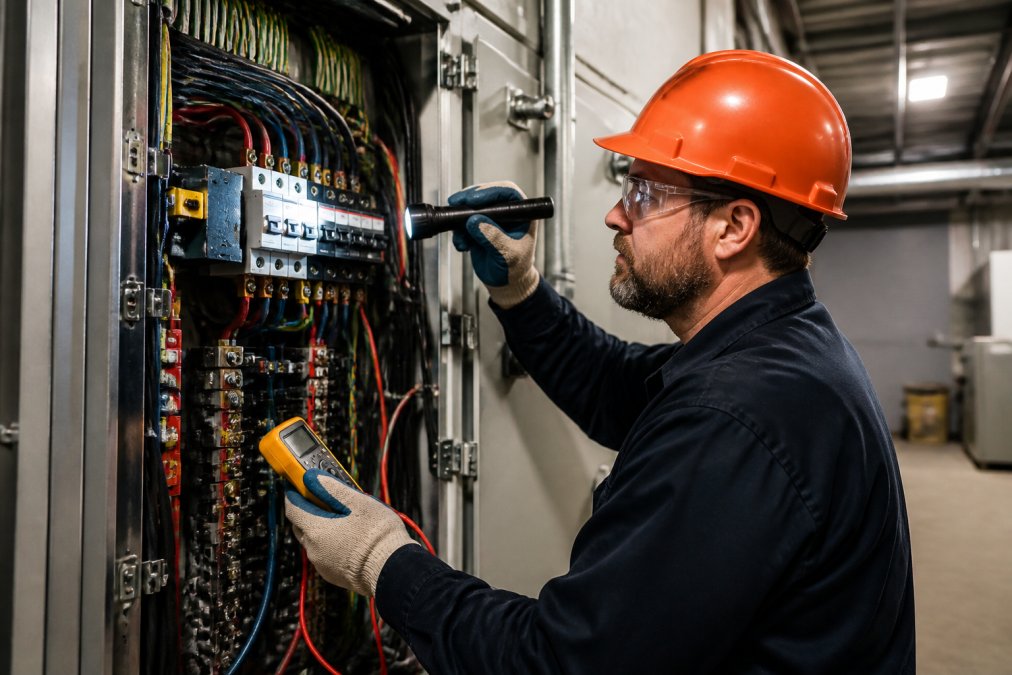
Visual inspection is where most problems reveal themselves first. A qualified technician examines the electrical panel, switchgear, circuit breakers, and connections for signs of wear, damage, or improper installation.
What to look for during visual inspection:
- Corrosion or discoloration on terminals and connections (indicates moisture or heat damage)
- Loose or missing fasteners on breakers and bus bars
- Signs of arcing or burn marks on components
- Improper cable routing or strain on connections
- Dust accumulation or debris inside the panel enclosure
- Visible damage to insulation or component housings
- Improper labeling or missing circuit identification
Most facilities perform visual inspections quarterly (30-60 minutes depending on panel size). Document everything with photos and notes to create a record that identifies patterns of deterioration.
Testing Electrical Connections and Torque
Testing validates that connections are secure and functioning correctly. Loose connections generate heat, degrade insulation, and eventually cause failure.
Torque testing ensures all connections meet manufacturer specifications. Different components require different torque values; using the wrong setting leaves connections loose or over-tightens them, both causing problems.
The process involves:
- De-energizing the circuit or component being tested (lockout/tagout procedures apply)
- Using a calibrated torque wrench to measure connection tightness
- Adjusting connections that fall outside specification
- Recording torque values for each connection tested
- Re-energizing and verifying normal operation
Insulation resistance testing identifies components approaching failure before they actually fail, as aging insulation’s resistance decreases. Most facilities conduct this testing annually or biannually.
Cleaning and Debris Removal
Dust and debris inside an electrical panel reduce cooling efficiency, create fire hazards, bridge connections, trap heat, and create unintended conductive paths.
Cleaning procedures: use compressed air or soft brushes to remove dust and debris, pay special attention to cooling vents and heat sinks, remove foreign objects, clean terminal blocks carefully, and verify all covers are properly reinstalled. Most facilities clean annually or semi-annually; industrial facilities with high dust loads may need quarterly cleaning (1-2 hours per session).
NFPA 70B Electrical Maintenance Standards Explained
NFPA 70B is the National Fire Protection Association’s standard for electrical equipment maintenance, the baseline for compliance and safety that helps you build a maintenance plan meeting regulatory expectations.
NFPA 70B establishes maintenance intervals, testing procedures, and documentation requirements. Different components and environments require different frequencies: a clean office panel needs less maintenance than one in a manufacturing facility with high dust and vibration.
The standard requires maintenance by qualified personnel trained in electrical safety and specific equipment, with documentation of dates, findings, and corrective actions. This proves compliance and creates a historical record predicting future failures.
Key maintenance frequencies per NFPA 70B include visual inspections every 12 months, thermographic surveys every 2-3 years for most facilities, and torque testing on critical connections every 3-5 years depending on environment and equipment type. Emergency and exit lighting systems must be tested monthly for operation and annually for full battery capacity.
Electrical Panel Thermal Imaging Benefits for Predictive Maintenance
Thermal imaging detects heat patterns invisible to the naked eye: loose connections generating excess heat, insulation breakdown showing as hot spots, and overloaded circuits running hotter than normal, catching all before they fail.
An infrared camera measures component and connection temperatures. Any component running significantly hotter than neighbors is a red flag, a connection at 130°F instead of 95°F usually indicates a loose connection creating resistance.
Thermal imaging identifies problems weeks or months before failure, is non-invasive (no de-energizing required), creates shareable visual records, and shifts maintenance from reactive to predictive, dramatically reducing downtime and emergency repair costs.
Most facilities perform thermographic surveys every 2-3 years as part of their electrical panel maintenance plan.
Key Components of an Effective Maintenance Plan
An effective maintenance plan has five core elements: documented schedule, clear procedures, qualified personnel, work tracking and documentation, and a process for acting on findings.
Emergency and Exit Lighting Testing
Emergency and exit lighting systems must function during power outages. They’re not optional, they’re required by code and essential for life safety. Testing ensures they actually work when needed.
Maintenance Logs and Documentation
Maintenance logs are your proof of diligence. They document that you’re performing required maintenance, what you found, and what actions you took. If something goes wrong, these logs demonstrate that you were actively managing the risk.
An effective maintenance log captures:
- Date and time of maintenance activity
- Technician name and certification
- Specific components or areas inspected or tested
- Findings (any issues, anomalies, or out-of-spec readings)
- Corrective actions taken
- Follow-up actions required (with target completion dates)
- Approval signature
Digital Maintenance Management and CMMS Integration
A computerized maintenance management system automates scheduling, work order generation, and documentation. Instead of managing maintenance through spreadsheets and paper logs, your team works through a digital system that coordinates activities, captures data, and generates reports.
Creating Your Maintenance Schedule and Frequency
Your maintenance schedule should balance thorough coverage with operational efficiency. Too-frequent maintenance disrupts operations unnecessarily. Too-infrequent maintenance leaves you exposed to failures.
| Maintenance Task | Frequency | Duration | Best Timing |
|---|---|---|---|
| Visual inspection | Quarterly | 30-60 minutes | During low-demand periods |
| Cleaning and debris removal | Semi-annually | 1-2 hours | Scheduled maintenance window |
| Torque testing (connections) | Annually or biannually | 2-4 hours | Off-peak hours |
| Thermographic survey | Every 2-3 years | 1-2 hours | Any time (non-invasive) |
| Emergency lighting testing | Monthly (functional), annually (full-load) | 30 minutes monthly, 2-3 hours annual | Off-peak hours |
| Insulation resistance testing | Annually or biannually | 1-2 hours | Scheduled maintenance window |
Reducing Downtime and Extending System Lifespan
The ultimate goal of preventive maintenance is simple: keep your electrical system running reliably and extend the lifespan of your equipment. A well-maintained electrical panel operates efficiently for 30-40 years or longer. Neglected panels fail prematurely, often catastrophically.
Frequently Asked Questions
What are the essential maintenance steps for a commercial electrical panel?
A complete commercial electrical panel maintenance routine includes visual inspection for corrosion and loose connections, thermal imaging to detect hot spots, torque testing of electrical connections, cleaning debris from the panel, testing circuit breakers and protective devices, verifying emergency lighting functionality, and documenting all findings. Each step prevents equipment failure and ensures operational continuity. Most facilities benefit from scheduling these steps quarterly or semi-annually, depending on usage patterns and environmental conditions.
How often should commercial electrical panels be inspected?
NFPA 70B standards recommend inspecting electrical equipment at intervals based on the equipment type and environment. Most commercial facilities should conduct visual inspections every 3 to 6 months, with more comprehensive thermal imaging and testing annually. High-demand facilities, those in harsh environments, or systems supporting critical operations may require quarterly inspections. Your specific maintenance frequency depends on age, load, environmental exposure, and compliance requirements, a qualified electrician can assess your facility’s needs.
What is the 80% rule for electrical panels and why does it matter?
The 80% rule, established by the National Electrical Code, states that the total load on a circuit breaker panel cannot exceed 80% of its rated capacity under normal operating conditions. This rule prevents overheating, reduces arc flash hazards, and protects equipment lifespan. For example, a 200-amp panel should carry no more than 160 amps of continuous load. Exceeding this threshold risks tripping breakers, creating fire hazards, and shortening equipment life. Regular maintenance includes verifying that your facility operates within this safe threshold.
Why is thermal imaging critical for electrical panel maintenance?
Thermal imaging detects overheating connections, failing components, and imbalanced loads before they cause failures. Hot spots visible on thermal scans indicate loose connections, corroded terminals, or failing circuit breakers, problems that visual inspection alone might miss. By catching these issues early, thermal imaging prevents unexpected downtime, reduces fire risk, and extends equipment reliability. Most commercial facilities benefit from annual thermal imaging as part of their preventive maintenance schedule to maintain system integrity.
What are the NFPA 70B requirements for electrical maintenance?
NFPA 70B is the standard for electrical equipment maintenance in commercial facilities. It requires documented maintenance schedules, visual inspections, testing of protective devices, insulation resistance testing, and thermal imaging at defined intervals. The standard emphasizes preventive maintenance to reduce arc flash hazards, ensure equipment reliability, and maintain facility safety. Compliance protects your facility from liability, supports insurance coverage, and ensures your electrical system operates safely. Working with certified electricians familiar with NFPA 70B standards ensures your maintenance plan meets all regulatory requirements.
How can a maintenance plan reduce insurance premiums and facility downtime?
Documented preventive maintenance demonstrates risk management to insurers, often reducing premiums by 5-15% depending on your facility type and compliance level. More importantly, regular maintenance prevents unexpected failures that cause costly downtime. By catching problems early through thermal imaging, torque testing, and visual inspections, you avoid emergency repairs, production stops, and emergency service fees. A well-maintained electrical system also supports business continuity, protects tenant operations, and preserves equipment value, benefits that extend far beyond insurance savings.
