
Table of Contents
- Why Hiring the Right Electrician for New Construction Matters
- Questions to Ask an Electrician Before Hiring
- How to Verify an Electrician’s License and Insurance
- Understanding the New Construction Electrical Rough-In Timeline
- Using an Electrical Contractor Bid Checklist to Compare Quotes
- Scope of Work and Code Compliance for New Construction
- Contract Terms, Insurance, and Warranties
- Frequently Asked Questions
Last Updated: October 9, 2026
Why Hiring the Right Electrician for New Construction Matters
Hiring electrician new construction is one of the most critical decisions you’ll make during a building project. The electrical system you install today determines safety, code compliance, and whether your new space can handle modern technology demands for decades to come.
Unlike renovation work, new construction electrical work requires coordination with multiple trades, adherence to strict building codes, and precise planning from the foundation stage onward. A misstep here isn’t just expensive to fix, it can delay your entire project, trigger failed inspections, and leave you with a system that can’t support your actual needs.
This guide walks you through everything you need to know about hiring an electrician for new construction: the questions to ask, how to verify credentials, what to expect during the rough-in phase, and how to compare bids fairly. We’ll also cover the contract terms and compliance checkpoints that protect both you and your electrician.
Questions to Ask an Electrician Before Hiring
Before you commit to any electrician, you need answers to specific questions about their experience with hiring electrician new construction work. These questions separate contractors who understand the unique demands of building projects from those who primarily do repairs.
Start by asking about their experience with projects similar to yours. How many new construction projects have they completed? What types, residential, commercial, mixed-use? How long ago? A contractor with ten years of residential remodel experience may lack the systems knowledge needed for a 50-unit apartment complex.
Ask about their familiarity with your local building codes and inspection requirements. Code requirements vary by jurisdiction, and a contractor who knows your area’s specific standards will anticipate problems before they happen.
Inquire about their approach to coordinating with other trades. In new construction, electricians work alongside framers, HVAC contractors, plumbers, and general contractors. How do they communicate with these teams? Do they attend job site meetings? Can they adapt when the framing schedule slips or the HVAC layout changes?
Ask for references from general contractors or project managers they’ve worked with, not just homeowners. A contractor can tell you they’re reliable; a GC who’s hired them multiple times proves it.
Finally, ask about their timeline expectations for your specific project scope. A vague answer here signals they haven’t thought through the work carefully. A specific electrician should be able to estimate rough-in duration, trim-out timing, and final inspection readiness based on your project’s square footage and complexity.
How to Verify an Electrician’s License and Insurance
Verification is non-negotiable. An unlicensed electrician may save money upfront, but you’ll pay for it in failed inspections, code violations, and liability exposure if someone is injured.
Every electrician working on a job site must carry a valid license issued by your state’s licensing board. Licensing requirements vary by state, but typically electricians must pass exams demonstrating knowledge of electrical code, safety practices, and technical skills.
Insurance is equally critical. Electricians should carry both general liability insurance and workers’ compensation insurance. General liability covers damage to your property during the work. Workers’ compensation covers injuries to their employees on your job site. Request a Certificate of Insurance directly from their insurance carrier, not from the contractor.
Call the insurance company to verify the policy is active. Contractors sometimes provide expired certificates or certificates for policies they no longer maintain. A quick phone call prevents discovering mid-project that they’re uninsured.
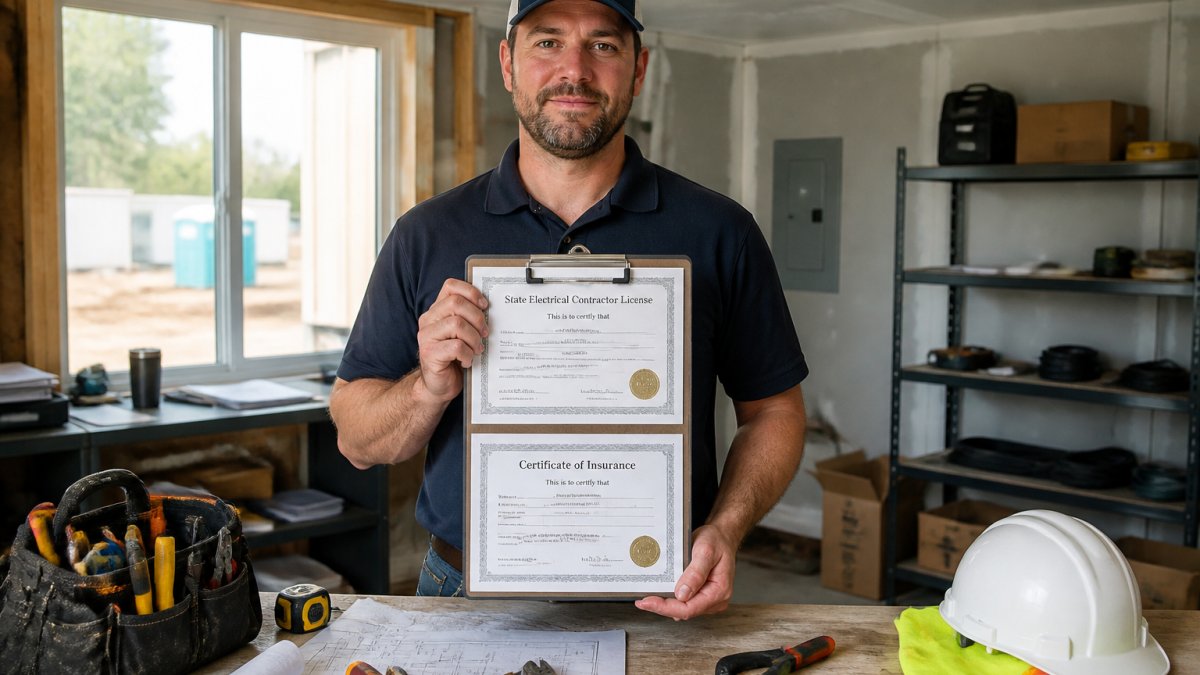
Ask whether they carry bonding. A bond guarantees that if the contractor fails to complete the work or pay their suppliers, the bonding company covers the cost. Not all states require bonding for electricians, but it’s a strong sign of financial stability and professionalism.
Document everything. Keep copies of their license, insurance certificates, and any bonding paperwork in your project file. This protects you if a problem arises later and someone questions whether the work was done by a licensed, insured professional.
Understanding the New Construction Electrical Rough-In Timeline
The new construction electrical rough-in timeline determines when your electrician shows up, how long they stay, and how their schedule affects the rest of your project. Understanding this prevents surprises and keeps your timeline on track.
Rough-in is the phase where electricians install all the wiring, conduit, boxes, and panels before walls are closed. It typically happens after framing is complete but before drywall. For a typical residential new construction project, rough-in takes one to three weeks depending on the home’s size and complexity.
Timing matters because rough-in must happen before drywall goes up. Once walls are closed, running new circuits or moving outlets becomes exponentially more expensive.
Many projects schedule rough-in inspection before drywall. This is critical. A rough-in inspection allows the building inspector to verify that all wiring, boxes, and conduit are installed correctly and meet code before they’re hidden behind walls. Failing rough-in inspection means opening walls to fix problems, a costly delay.
After drywall, trim-out follows weeks or months later. Trim-out is when electricians install outlets, switches, light fixtures, and connect everything to the panel. Trim-out happens after painting and flooring, just before final inspection. This phase typically takes one to two weeks for residential work.
Ask your electrician for a detailed timeline that includes rough-in start and end dates, inspection dates, and trim-out scheduling. A contractor who can’t provide this hasn’t thought through the project carefully.
Using an Electrical Contractor Bid Checklist to Compare Quotes
Comparing bids fairly requires more than looking at total price. You need to know what’s included in each bid and whether all contractors are quoting the same scope of work.
Create a checklist of every electrical component your project requires: panel size and location, number of circuits, outlet and switch locations, lighting fixtures, special systems like EV charging or solar, and any custom requirements. Share this same checklist with every contractor you request bids from.
When bids arrive, check that each contractor has listed the same items. If one bid is significantly lower, ask why. Are they using different materials? Fewer circuits? A smaller panel? Understanding the difference prevents selecting the cheapest bid only to discover you’re missing critical components.
Review the bid for detail about labor, materials, permits, and inspections. A vague bid that says “electrical rough-in: $X” tells you nothing. A detailed bid breaks down labor hours, material costs, permit fees, and inspection costs separately.
Ask whether the bid includes permit costs and inspection fees. Some contractors include these; others bill them separately. Clarifying this prevents sticker shock when the permit arrives.
Check whether the bid includes a timeline. The cheapest electrician might be cheap because they’re slow and will tie up your project. A slightly higher bid from a contractor who commits to your schedule may save money overall by keeping your project moving.
| Bid Component | What to Check | Red Flag |
|---|---|---|
| Scope of work | Same items as other bids | Missing circuits or outlets |
| Labor costs | Broken down by phase | Vague lump sum |
| Materials | Specific products listed | “Materials as needed” |
| Permits and inspections | Included or clearly separate | Unclear who pays |
| Timeline | Specific start and end dates | “To be determined” |
| Warranty | Work and materials covered | No warranty mentioned |
Don’t automatically choose the lowest bid. The middle bid from a contractor with strong references and clear communication often delivers better value than the cheapest option.
Scope of Work and Code Compliance for New Construction
The scope of work defines exactly what electrical work the contractor will perform. A clear scope prevents disputes about what’s included and what costs extra.
Your scope should specify every electrical component: main panel size and location, subpanels if needed, number and location of all outlets and switches, lighting fixtures and their locations, any dedicated circuits for appliances or equipment, and special systems like EV charging, solar, or backup generators. It should also specify materials, wire gauge, conduit type, outlet and switch grades, so there’s no question about quality.
Code compliance is non-negotiable in new construction. All work must meet the National Electrical Code (NEC) and any additional requirements in your local jurisdiction. The NEC is updated every three years; your electrician should be working to the current code version.
Building inspectors verify code compliance at rough-in and final inspection. Common code requirements include proper grounding, correct wire sizing for circuits, adequate outlet spacing, proper breaker ratings, and correct installation of GFCI outlets in wet areas. A knowledgeable electrician anticipates these requirements and builds them in automatically.
Ask your electrician how they stay current with code changes. Do they attend training? Subscribe to code update services? Belong to professional organizations? This matters because code violations discovered at inspection delay your project and require rework.
Include in your contract language that all work will be performed to current NEC standards and local code requirements, and that the electrician is responsible for obtaining any required permits and ensuring work passes inspection.
Contract Terms, Insurance, and Warranties
A solid contract protects both you and your electrician. It should clearly state the scope, timeline, payment terms, and what happens if problems arise.
Payment terms matter significantly. Many contractors require a deposit, typically 20 to 30 percent, to begin work. The balance is often split between rough-in completion and final inspection completion. Never pay the full amount upfront.
Include language about what happens if the work fails inspection. Does the contractor return to fix problems at no charge? Who pays for re-inspection fees?
The contract should specify warranty coverage. Most electricians warrant their labor for one year, meaning if something they installed fails within a year, they’ll fix it. Materials typically carry manufacturer warranties. Clarify what’s covered under each.
Include a change order process. If you decide mid-project to add circuits, move outlets, or upgrade to a larger panel, a change order documents the scope change, cost adjustment, and timeline impact. This prevents disputes about surprise charges.
Address liability and insurance requirements. The contract should require the electrician to maintain current licenses, insurance, and bonding throughout the project. It should also clarify that they’re responsible for their own workers’ injuries and property damage.
Include a timeline with specific start and completion dates. If the contractor falls behind, the contract should specify whether they’re liable for delays caused by other trades.
Finally, include a dispute resolution clause. If disagreements arise, will you pursue mediation before litigation? This can save money and preserve the relationship if issues need to be resolved mid-project.
Hiring an electrician for new construction requires diligence, but the investment in vetting pays off in a system that works reliably for decades. Our team of certified professionals delivers safe, code-compliant work ranging from panel upgrades and home rewiring to new installations and repairs.
Frequently Asked Questions
What should I look for when hiring an electrician for new construction?
Look for a licensed, insured electrical contractor with experience in new construction projects. Verify their credentials through your state licensing board, ask for references from recent projects, and ensure they understand local building codes and permit requirements. Request a detailed bid that breaks down labor, materials, and timeline. An experienced electrician will also discuss the rough-in phase, inspections, and how they coordinate with other trades on your job site.
How do I compare electrical contractor bids for a new build?
Use a bid checklist to ensure all quotes include the same scope of work, materials specifications, labor costs, permit fees, and timeline. Compare line-item pricing rather than total cost alone, a lower bid may exclude inspections or use lower-grade materials. Ask each contractor how they handle change orders, warranty coverage, and inspection coordination. Request references from similar projects and verify that each contractor’s insurance and licensing are current and valid.
What does the electrical rough-in phase involve, and when should it happen?
The rough-in phase occurs after framing is complete but before drywall installation. The electrician installs conduit, wiring, boxes, and panels according to the electrical plan and code requirements. This phase includes inspection by local authorities before the walls close up. Rough-in typically takes 1-3 weeks depending on project size. Scheduling it correctly is critical because any code violations caught during inspection will delay the project. Your general contractor should coordinate timing with all trades.
How do I verify an electrician’s license and insurance before hiring?
Contact your state’s licensing board or electrical contractor regulatory agency to confirm the electrician’s current license status, any disciplinary history, and whether they hold the appropriate classification for your project type. Request proof of general liability insurance and workers’ compensation coverage, and verify these policies directly with the insurance provider. Never hire an unlicensed electrician for new construction, it violates code, voids permits, and exposes you to liability if someone is injured on site.
