
Table of Contents
- Is Your Electrical Panel Trying to Tell You Something?
- 1. Flickering or Dimming Lights
- 2. Frequently Tripping Circuit Breakers
- 3. Buzzing, Sizzling, or Crackling Sounds
- 4. Burning Smells or Signs of Overheating
- 5. Corrosion or Visible Damage
- 6. Panel Age and Electrical Panel Lifespan
- 7. Known Hazardous Panel Types and Recalled Equipment
- What Happens During an Electrical Panel Inspection
- Repair or Replace: How to Decide
- Permits, Codes, and What Replacement Involves
- Frequently Asked Questions
Last Updated: October 5, 2026
Is Your Electrical Panel Trying to Tell You Something?
Your electrical panel rarely fails without warning, it flickers, buzzes, trips, and overheats first.
This guide covers seven warnings that matter most.
The stakes are real. Electrical failures cause thousands of home fires every year, according to the U.S. Fire Administration electrical fire data.
Below, we cover each warning sign, what you can safely check yourself, when to call a licensed electrician, and what replacement involves.
1. Flickering or Dimming Lights
Lights that flicker when the fridge kicks on usually signal a loose connection or overloaded circuit, while whole-house dimming means your panel may lack capacity.
Watch for these patterns:
- Flickering in one room only (often a local wiring issue)
- Dimming across the whole house (often a panel or service problem)
One occasional flicker is normal; constant flickering points to loose connections inside the panel, and loose connections create heat.
A loose neutral connection can cause voltage to swing between circuits. That damages electronics and can start a fire inside the panel. Do not ignore whole-house dimming.
2. Frequently Tripping Circuit Breakers
A breaker that trips once is doing its job; one that trips weekly means the circuit is overloaded or failing.
Breakers trip for three main reasons:
- Overloaded circuits: too many devices drawing power on one circuit
- Short circuits: hot and neutral wires touching where they shouldn’t
- Ground faults: current escaping to ground, often from damaged wiring
Modern homes run far more electronics than panels of 30 years ago were built for. If you keep resetting the same breaker, the panel is undersized.
How many trips are too many?
More than one trip per month on the same breaker is a red flag. Two or more breakers tripping regularly means it’s time for an electrical panel inspection.
3. Buzzing, Sizzling, or Crackling Sounds
Any unusual sound from your breaker panel deserves attention. Buzzing, sizzling, and crackling mean electricity is arcing where it shouldn’t:
- Buzzing: a loose breaker or failing internal component
- Sizzling: moisture meeting live current, or insulation breaking down
- Crackling: electrical arcing, an active fire hazard
A faint hum is normal; anything louder, sharper, or new is not. Turn off the main breaker and call an electrician if you hear crackling.
Put your ear near the panel cover, not against it. Never remove the dead front yourself. The main lugs stay live even with the main breaker off.
4. Burning Smells or Signs of Overheating
A burning smell near your electrical panel is an emergency, not a warning, heat is building up right now.
Signs of overheating include:
- A persistent burnt or fishy odor near the panel
- Warm or hot panel cover to the touch
- Discolored or scorched breaker faces
Overheating comes from resistance: loose connections, corroded terminals, and overloaded circuits turn current into heat that ignites nearby material. If you smell burning, shut off power at the main breaker if it’s safe to reach, and call a licensed electrician immediately.
5. Corrosion or Visible Damage
Rust, water stains, and scorch marks mean internal components are compromised, raising shock and fire risk. Look for:
- Rust or white powder on breakers or bus bars
- Water stains on the panel or wall around it
- Scorch marks or black soot near any breaker
A panel that has taken on moisture needs professional assessment, even if everything still works.
6. Panel Age and Electrical Panel Lifespan
Most electrical panels last 25 to 40 years. Past that, components wear out, parts get scarce, and the panel may not meet current codes.
Age alone isn’t a reason to replace a panel; age plus any other warning sign usually is.
If your panel is over 30 years old, schedule an inspection so a licensed electrician can say whether it’s safe or due for replacement.
7. Known Hazardous Panel Types and Recalled Equipment
Some panel brands have documented safety records that make replacement the smart move. A hazardous panel looks identical to a safe one from outside, and the risk lives in breakers that fail to trip under overload, so judge by brand, model, and era, not appearance.
How to identify your panel
Start with the label. Every listed panel has a data label, usually inside the door or on the enclosure side, showing:
- Manufacturer name
- Model or catalog number
- Maximum amperage rating (for example, 100A, 150A, or 200A)
Write down the brand and model number first, that drives every later decision.
Panel types with documented safety concerns
A few panel families come up repeatedly in inspection reports and safety notices:
- Federal Pacific Electric (FPE) Stab-Lok panels: widely reported to have breakers that fail to trip under overload. Many electricians treat these as a replacement candidate on sight.
- Zinsco and Sylvania-Zinsco panels: known for bus bar corrosion and breakers that weld closed instead of tripping.
- Pushmatic panels: obsolete, with parts that are hard to source and breakers that can seize.
This list is not exhaustive; a panel not named here can still be unsafe. Treat it as a starting point, not a clearance.
How to verify recalls and safety notices
Recalls and safety notices are public. Check them yourself:
- Note the brand, model, and date code from the panel label.
- Search the manufacturer’s website for a recall or safety notice page.
- Check the Consumer Product Safety Commission recall database at CPSC recall database for electrical panel and breaker recalls.
- If you find a match, stop using the affected circuit if you can do so safely and call a licensed electrician.
A recall notice is not a repair instruction. Do not attempt to replace a recalled breaker yourself. The panel interior remains energized even with the main breaker off, and the main lugs are always live.
What to do if you find a hazardous panel
Finding a known problem brand doesn’t mean your home is in danger today, it means the panel has a higher-than-normal chance of failing to protect you.
A licensed electrician can confirm the model, check for overheating or arcing, and say whether the panel needs replacement or a component can be addressed. With a documented hazardous brand, replacement is usually the only option that removes the risk.
A hazardous panel can look perfectly normal from the outside. Brand, model, and manufacturing era matter more than appearance. Check the label, verify recalls, and let a licensed electrician make the call.
What Happens During an Electrical Panel Inspection
An electrical panel inspection is a hands-on safety check of your service equipment, wiring, and connections. A licensed electrician opens the panel, tests breakers, and looks for heat, corrosion, and code violations.
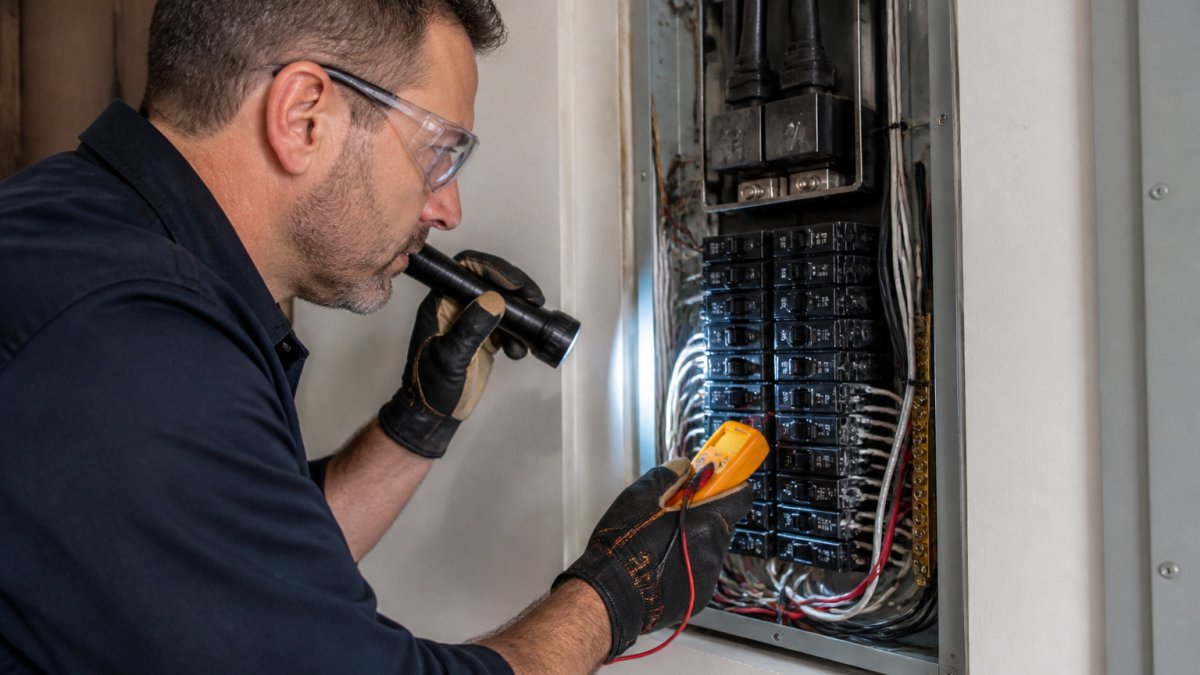
A typical inspection covers:
- Main breaker and service amperage
- Breaker condition and trip testing
- Wire connections and torque on terminals
You’ll get a clear answer: repair, monitor, or replace. We perform these inspections for homeowners and business owners and explain findings in plain language before any work begins.
What can you check yourself?
Safe checks:
- Look for rust, stains, or scorch marks on the cover
- Listen for buzzing or crackling
- Note which breakers trip and how often
Leave to an electrician:
- Removing the panel cover
- Touching breakers or wiring
- Tightening connections
Repair or Replace: How to Decide
Repair and replacement solve different problems, and the wrong choice can leave a hazard in place.
When repair is the right call
Repair makes sense when the panel is sound and the problem is isolated to one component or circuit:
- A single breaker that trips repeatedly while the rest of the panel behaves normally
- A breaker that has visibly failed but the bus bar and enclosure are clean
- A loose terminal connection that can be re-torqued to specification
In these cases, the panel is doing its job. The fault is downstream or in one part.
When replacement is the right call
Replacement makes sense when the panel itself is the problem or can’t safely support the home:
- Age past the service life. Most panels are rated for roughly 25 to 40 years. Past that range, parts get scarce and internal components wear out.
- Documented hazardous brand. FPE, Zinsco, and similar panels are replacement candidates regardless of how they look.
- Corrosion or water damage. Rust, white powder on the bus bar, or water stains mean the enclosure has been compromised.
A simple decision framework
| Situation | Likely Move | Why |
|---|---|---|
| One tripping breaker, panel under 20 years old | Repair | Isolated fault, low cost |
| Rust, water stains, or scorch marks | Replace | Corrosion and heat weaken the whole enclosure |
| Panel over 30 years old with any other symptom | Replace | Parts scarce, code gaps, cumulative wear |
| Documented hazardous brand (FPE, Zinsco) | Replace | Breakers may not trip under fault |
| Adding an EV charger, heat pump, or major remodel | Upgrade | Existing service amperage is likely insufficient |
| Breakers trip on multiple circuits | Replace or upgrade | Panel is undersized for the home’s load |
This table is a starting point, not a verdict, only an on-site assessment confirms which path applies.
What drives the cost
Replacement cost varies based on factors a homeowner can check:
- Service amperage. Moving from 100A to 200A is a larger job than a like-for-like swap.
- Panel location. An exterior panel, a panel in a finished wall, or a panel with limited working clearance adds labor.
- Wiring condition. Aluminum branch wiring, knob-and-tube, or undersized feeders may need to be addressed before the new panel can be installed.
Because these factors vary so much, any estimate without an on-site look is a guess. A written estimate after inspection is the only number worth planning around.
The code and permit side
Panel replacement almost always requires a permit and final inspection. The work must meet your local jurisdiction’s adopted code, typically covering grounding and bonding, working clearance, and arc-fault protection on specified circuits.
Skipping the permit does not save money. Unpermitted work can fail at resale, complicate an insurance claim, and may need to be redone.
Before you commit to either repair or replacement, ask the electrician to explain what they found, what the fix is, and what happens if you wait. A clear answer to those three questions is a good sign you are working with someone who is diagnosing, not just selling.
The bottom line
Repair when the panel is sound and the fault is isolated. Replace when it’s old, hazardous, damaged, or undersized. When in doubt, get an on-site assessment, an inspection costs far less than guessing wrong.
Permits, Codes, and What Replacement Involves
A replacement typically includes:
- Permit application and utility coordination
- Power shutoff and old panel removal
- New panel mounting and wiring
- Breaker installation and labeling
- Inspection and power restoration
Most replacements take one to two days; older homes with knob-and-tube wiring may need more work.
The signs your electrical panel needs replacement rarely appear alone. Flickering lights, tripping breakers, odd sounds, and burning smells often show up together.
We provide certified electricians, code-compliant work, honest pricing, and deep panel upgrade experience for homes and businesses, handling projects from inspection through final sign-off.
Get started with us and get a free estimate on your panel inspection or replacement.
Frequently Asked Questions
How do I know if my electrical panel needs to be replaced?
Watch for flickering or dimming lights, breakers that trip often, buzzing or crackling sounds, burning smells, rust or corrosion, and physical damage. Age matters too: most panels last 25 to 40 years, so a 50-year-old unit should be evaluated. If your panel is a known hazardous type like Federal Pacific, replacement is usually recommended. A licensed electrician can confirm with an electrical panel inspection.
What is the average lifespan of a home electrical panel?
Most residential electrical panels last between 25 and 40 years. After 25 years, components like breakers and bus bars can wear out, leading to loose connections and heat buildup. Even if it still works, an older panel may not meet current electrical codes or handle modern electrical loads from EVs, heat pumps, or home offices. If yours is over 30, schedule an electrical panel inspection to assess its condition.
Are frequently tripping circuit breakers a sign that the panel needs replacement?
Not always. A single breaker that trips might just be overloaded or faulty. But if multiple breakers trip often, or the main breaker trips, it can mean the panel is overloaded or failing. Frequently tripping circuit breakers are a common warning sign, especially in older panels. An electrician can test the circuits and determine whether repair or replacement is the safer choice.
What should I do if my electrical panel smells like burning?
Treat a burning smell from your electrical panel as an emergency. Turn off the main breaker if it is safe to do so, and call a licensed electrician immediately. Burning odors often indicate overheating components, arcing, or melting insulation, which are fire hazards. Do not use the panel until it has been inspected and cleared by a professional. If you see smoke or sparks, leave the building and call 911.
